




The Grand Egyptian Museum | Largest Egyptian Museum Worldwide
The Grand Egyptian Museum | The largest museum dedicated to one civilization
The Grand Egyptian Museum is one of the most important cultural and archaeological projects in the modern world.
Located near the legendary Pyramids of Giza, the museum represents a bridge between ancient Egyptian civilization and modern museum technology.
Built to preserve and display Egypt’s priceless treasures, the Grand Egyptian Museum, often referred to as the GEM, is expected to become the largest archaeological museum dedicated to a single civilization.
The importance of the Grand Egyptian Museum | Egypt’s Modern Gateway to Ancient Civilization
Covering an area of approximately 500,000 square meters, the museum stands as a symbol of Egypt’s historical importance and its commitment to preserving its extraordinary heritage for future generations.
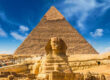
The location itself is exceptional, offering visitors stunning panoramic views of the pyramids, creating a unique connection between the ancient monuments and the modern architectural masterpiece.
The design of the museum combines modern engineering with inspiration from ancient Egyptian culture.
Its impressive façade is made from translucent alabaster stone, allowing sunlight to illuminate the building beautifully during the day.
Upon entering, visitors are welcomed by the colossal statue of King Ramses II, one of the most powerful pharaohs of ancient Egypt.
This enormous statue immediately gives guests a sense of the grandeur and majesty of Egyptian civilization.
One of the Grand Egyptian Museum’s greatest highlights | the full treasure collection of Pharaoh Tutankhamun
One of the museum’s greatest highlights is the complete collection of treasures belonging to the young Egyptian King Tutankhamun.
For the first time in history, all the artifacts discovered in Tutankhamun’s tomb are displayed together in one place.
These treasures include his famous golden mask, jewelry, ceremonial chariots, furniture, statues, and personal belongings.
The collection offers visitors a rare opportunity to understand the life, beliefs, and burial traditions of ancient Egyptian royalty.
In addition to Tutankhamun’s treasures, the museum houses more than 100,000 artifacts from different periods of Egyptian history, including the Pharaonic, Greco-Roman, and late ancient eras.
The exhibits are organized chronologically and thematically, allowing visitors to explore the development of Egyptian civilization over thousands of years.
Advanced multimedia displays, interactive technology, and modern lighting systems enhance the visitor experience and make the museum accessible to people of all ages.
The Grand Egyptian Museum is not only a place for tourism but also a major center for education and scientific research.
It includes conservation laboratories equipped with advanced technology to restore and preserve fragile artifacts.
Egyptian and international archaeologists work together inside these laboratories to protect historical objects from deterioration and ensure their survival for future generations.
The museum also offers educational programs, workshops, and cultural activities designed to inspire interest in archaeology and history.
Another remarkable feature of the museum is the Grand Staircase, an enormous ceremonial staircase lined with statues of kings, queens, and ancient deities.
As visitors ascend the staircase, they experience a visual journey through Egypt’s long and fascinating history.
The museum’s spacious galleries, gardens, restaurants, and visitor facilities make it one of the most modern and comfortable museum experiences in the world.
The opening of the Grand Egyptian Museum on 1st November 2025 has also had a significant impact on tourism in Egypt.
It has attracted global attention and strengthened Egypt’s position as one of the world’s leading cultural destinations.
Millions of tourists visit Egypt every year to discover its ancient wonders, and the GEM adds a new dimension to the country’s tourism industry.
The museum allows visitors to explore Egyptian history in a comprehensive and organized environment while remaining close to the iconic pyramids.
The Grand Egyptian Museum’s location near the Pyramids of Giza
The museum’s location near the Pyramids of Giza creates an unforgettable cultural experience.
Visitors can spend the day exploring the pyramids and the Great Sphinx of Giza before continuing their journey through the museum’s galleries.
This combination of ancient monuments and modern exhibition spaces reflects Egypt’s unique ability to preserve its past while embracing the future.
Environmental sustainability and modern infrastructure were also important considerations during the museum’s construction.
The building incorporates energy-efficient systems and environmentally conscious design principles. Wide open spaces, natural lighting,
and advanced climate control systems help protect the artifacts while creating a pleasant atmosphere for visitors.
The Grand Egyptian Museum represents far more than a simple collection of ancient objects. It is a celebration of human creativity, cultural identity, and historical continuity.
Every artifact tells a story about the people who lived along the Nile thousands of years ago — their beliefs, daily lives, achievements, and dreams.
Through its exhibitions and educational mission, the museum encourages visitors to appreciate the importance of preserving world heritage.
Today, the Grand Egyptian Museum stands as a proud symbol of Egypt’s rich civilization and cultural legacy.
It combines ancient history with modern innovation, offering an extraordinary experience for travelers, historians, students, and anyone fascinated by one of the greatest civilizations in human history.
As one of the world’s most anticipated cultural landmarks, the museum promises to inspire millions of visitors and preserve Egypt’s magnificent heritage for generations to come.
Call it the Grand Egyptian Museum or call it the Great Egyptian Museum; we call it the GEM.



1 Comment